
If you have histamine intolerance or MCAS and your symptoms reliably get worse in the second half of your menstrual cycle, you are not imagining it, and it is not random. There is a specific hormonal mechanism at play, and once you understand it, breakfast starts to look like a pretty reasonable place to do something about it.
This recipe uses ground flaxseed (linseeds) as its centrepiece, not as a trendy addition but because there is a solid clinical reason for it. I have been recommending flaxseed to women with histamine and hormone-related symptoms for years, and this bircher is one of the most practical ways to get it in daily. Prep time is five minutes the night before. It keeps in the fridge ready to grab and go. And it actually tastes good, which, as anyone who has spent time on a low histamine diet knows, is never something to take for granted.
Learn more about which foods are low and high histamine in the Happy Without Histamine – Low Histamine Foods Guide.
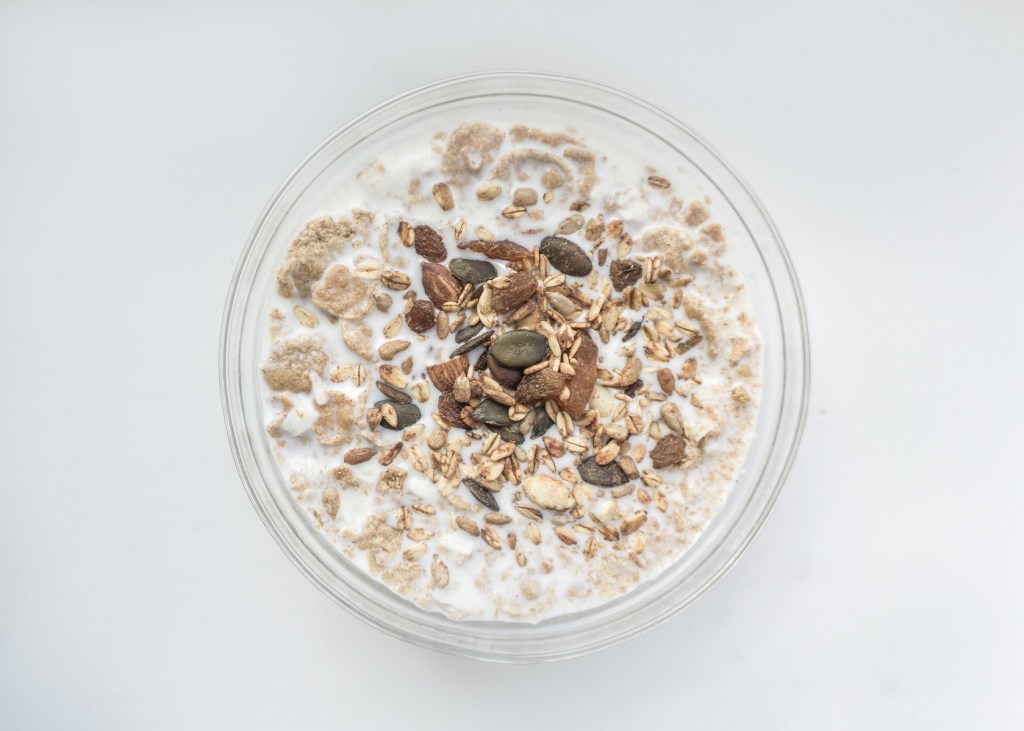
Low histamine apple flax bircher
- Prep time: 5 mins
- Cook time: 1.5 hours
- Total time: 8 hours to overnight
- Serves: 1
- Wheat free
- Dairy free
- Low histamine
- Low oxalate
Ingredients:
- 3/4 cup Rice Milk (or oat milk)
- 1 tbsp Whole Flax Seeds (linseed)
- 2 tbsp Ground Flax Seed
- 1/4 cup Oats (whole or quick cook)
- 1/2 tsp Ground Ginger (optional)
- pinch of Sea Salt
- 1 Green Apple (grated)
- 1 tsp Maple Syrup
Instructions:
- Add all of the ingredients to a bowl and mix thoroughly. Cover or transfer into a jar with a lid.
- Set on the bench for half an hour, then transfer to the fridge for eight hours minimum or overnight (can go straight into the fridge if you are pressed for time).
- Add more rice or oat milk if required to serve.
- You can top with more fruit, macadamia nuts, or ground flaxseed.
Variations and substitutions
Gluten-free: swap the oats for 3 tablespoons of hemp seeds or chia seeds per serve. Note that chia seeds are higher in oxalate, so if you are also managing oxalate load, hemp seeds are the better option.
Milk alternatives: rice milk is the most broadly tolerated option for histamine intolerance and MCAS. Oat milk works well if you tolerate it. Coconut milk can be used but is higher in oxalate.
Apple: green (Granny Smith) apple is lower in sugar and well tolerated for most people with histamine intolerance. Pear is a good substitute.
Storage
Store in a sealed mason jar or glass container. It will last up to three days in the fridge.
Why flaxseed? The oestrogen-histamine connection explained
If you have noticed that your histamine symptoms consistently peak in the second half of your cycle, from around day 15 through to the first day or two of your period, this is worth paying attention to, because there is a specific reason for it.
Oestrogen connects to H1 receptors in the body and can trigger mast cells to release more histamine. At the same time, histamine can stimulate the production of more oestrogen. So you get a cycle where each drives the other, and the result is that the luteal phase of the menstrual cycle, when oestrogen is relatively higher and progesterone relatively lower, is often when symptoms like flushing, overheating, food reactivity, and hot flushes are at their worst.
Progesterone is the counterbalance here, and as we age it naturally declines. Stress can reduce it further, because the adrenal glands, which are also working overtime when we are chronically stressed, produce some of our progesterone, and when those glands are under load, something has to give.
This is where flaxseed comes in. Flaxseeds contain lignans, a type of phytoestrogen, and when gut bacteria convert these lignans to enterolactone, the result is a compound that binds weakly to oestrogen receptors. The effect is much milder than oestrogen itself, which means it can help moderate the highs and lows rather than adding fuel to an already overloaded system.
Just 2 tablespoons of ground flaxseed daily is the amount that appears in the research on this mechanism. For best results, use it unheated (ground fresh if possible, as pre-ground flaxseed goes rancid faster than most people realise), and eat it consistently rather than only in the second half of the cycle, even though daily consumption also supports gut microbiome diversity.
One more thing worth knowing: xenoestrogens
Alongside the food piece, it is worth being aware of xenoestrogens. These are compounds that also connect to oestrogen receptors in the body, and they come primarily from plastics (BPA in bottles and packaging), synthetic fragrances, scented candles, and fragrances in cleaning and personal care products.
Reducing xenoestrogen exposure is one of those lower-effort changes that adds up across a day, and for women managing histamine and hormones simultaneously, it is a reasonable place to look. I avoid most synthetic fragrances in my personal care routine. If you need a starting point for finding products without the usual suspects, look for retailers that vet their suppliers specifically for this.
Frequently asked questions about this recipe
Is flaxseed low histamine?
Yes. Flaxseed (also called linseed) is considered low histamine and is generally well tolerated by people with histamine intolerance and MCAS. It is also low in oxalate, which makes it suitable for those who are managing both histamine and oxalate load simultaneously.
Can I use oat milk in this recipe?
Yes, oat milk works well here. Rice milk is the most broadly tolerated dairy-free option for histamine intolerance because it is the most neutral, but oat milk is a perfectly good substitute if you tolerate it. Avoid options with additives or fortified vitamins where possible, as these can be poorly tolerated by some people with MCAS.
Will oats spike my histamine symptoms?
Oats themselves are not considered a high-histamine food and are included on most low histamine food lists. For most people with histamine intolerance they are a good addition to the diet. If you are coeliac or highly reactive to gluten-containing grains, use the hemp or chia seed substitution noted in the recipe.
Does reheating this recipe increase histamine?
This recipe is designed to be eaten cold, straight from the fridge, so reheating is not part of the method. If you prefer it warm, a brief heat in the microwave or on the stovetop is fine, but avoid leaving it at room temperature for extended periods, as histamine levels in prepared food can increase over time.
Can I freeze this recipe?
I do not recommend freezing bircher. The texture of the oats and grated apple changes significantly on thawing. Bircher keeps well in the fridge for up to three days in a sealed jar, which makes it easy to prepare a few portions at once without needing to freeze.
How do I store low histamine overnight oats safely?
Use a sealed glass jar or glass container rather than plastic where possible (particularly relevant if you are also managing xenoestrogen exposure). Store in the fridge immediately after making. If you are highly sensitive, eat within 24 hours of preparing rather than leaving it for the full three days.
What other low histamine breakfast recipes work for PMS symptoms?
Other low histamine breakfasts that work well for women managing the hormonal piece include: plain rice or oat porridge with ground flaxseed stirred in, smoothies with blueberries and pear (well tolerated fruits for most people with MCAS), and egg-based breakfasts if you tolerate eggs without reacting. The consistent thread is that daily ground flaxseed in some form is the most practical way to support the oestrogen-histamine mechanism, and breakfast is an easy place to build that in.
Does the oestrogen-histamine cycle affect perimenopause too?
Yes, and often significantly. As progesterone levels decline more rapidly in perimenopause, the relative imbalance between oestrogen and progesterone becomes more pronounced, which can tip women who were previously managing their histamine reasonably well into a much more reactive phase. Hot flushes, flushing, and increased food reactivity in perimenopause often have this hormonal-histamine overlap underneath them. It is one of the reasons I see women in their mid-forties arriving with a sudden flare of symptoms they had not experienced as badly before. It is not that their bodies broke. It is that the hormonal load shifted, and the nervous system was already running close to its threshold.
The nervous system piece (because food is never the whole story)
I want to add one thing that is easy to overlook when you are focused on the food side of this. Chronic stress reduces progesterone through the mechanism I mentioned above, with the adrenal glands prioritising stress hormones over sex hormone production. This means that if the nervous system is running in chronic threat mode, which a lot of women with MCAS and histamine intolerance are doing without realising it, the hormonal picture gets harder to manage regardless of what you are eating.
The food changes matter. Getting the flaxseed in daily matters. Reducing xenoestrogen exposure matters. But if you are also under significant stress, or if your nervous system has been stuck in a high-alert state for a long time, those dietary changes will take you further than they would otherwise once the nervous system piece is also being addressed.
That is the part of this work that I spend a lot of time on with clients, and it is why my approach brings the gut and the nervous system together rather than treating them as separate problems. Food is a very good place to start. It is just not always enough on its own.
Want to eat like this every day?
This recipe is part of the Happy Without Histamine 4-Week Reboot, which includes over 55 recipes, four weeks of meal plans, and prep guides and shopping lists for each week. It is built around the foods that are most practical for women managing histamine intolerance and MCAS, and every recipe in it was developed through clinical and personal use.
If you are also interested in understanding how the hormonal-histamine connection fits into the bigger picture of why your symptoms are doing what they are doing, my free masterclass covers that alongside the gut and nervous system pieces.
Sick of boring low histamine meals?

Recipes like this are in the Ultra Low Histamine Meal Plan along with many more.
Over 55 recipes and 4 weekly meal plans, including prep guides and shopping lists for each week.
About Luanne Hopkinson
Luanne Hopkinson (GradDipHumNutr BSc ADipNutrMed, MRC Healthy Gut Practitioner) is the founder of Happy Without Histamine and a clinical nutritionist and neuroplasticity coach with a background in computer science and project management. She created the 5R Histamine Modulation Protocol™, helping women with MCAS and histamine intolerance for the last 8 years, across Australia and worldwide, to stop chasing triggers and start actually healing, by restoring the gut microbiome and regulating the nervous system so their body stops overreacting to everything.

